
Essential tips for choosing the right web hosting for your website’s success.
Choosing the best web hosting for your website is an important step in building a successful, effective site. As businesses rely more on the internet to operate and engage with customers, web hosting has become a key part of any growth strategy.
With so many hosting options available, the choice can be confusing, especially for new website owners. In this article, we’ll give you a complete guide to choosing the best web hosting for your website’s needs, focusing on the main factors to consider so your hosting meets your expectations and helps you reach your goals.
What Is Web Hosting?
Web hosting is a service that stores your website or web application and makes it accessible from many devices, such as desktop computers, mobile phones and tablets.
Every website or web application is made up of files, including images, videos, text and code, that need to be stored on special computers called servers. Web hosting providers maintain these physical servers, which you can rent to store your files, and they configure and run them. They also offer extra support covering security, backups and site performance, which saves you time and lets you focus on the core parts of your website.
Types of Web Hosting for Your Website

There are several types of web hosting to choose from, and each has its own specifications to suit websites of different sizes:
Learn more about why web hosting matters and the advantages of each type in detail, so you can choose the best one for your website.
What Are the Main Features of Web Hosting Services?
Most web hosting companies offer a range of plans to fit your site’s different needs. Hosting can be free or paid monthly, depending on several factors:
- Your website’s size: the bigger your site, the more hosting you need.
- Daily visitors: high-traffic sites need more powerful hosting plans.
- Traffic spikes: to keep your site from going down when traffic surges, you need hosting with enough resources.
- Hosting features: the more features you need, such as automatic backups or advanced security, the higher the cost.
Before you decide on a hosting service, it’s important to know what features each one offers:
An overview of the main features hosting services usually include
- 1. Disk space: the foundation of your website
To keep your website running smoothly, you need enough space to store files such as emails, images and databases. Think about how your site might grow and how many more visitors it might get in the future. Limited space hurts the user experience, so make sure you choose hosting with enough room.
- 2. Bandwidth and data transfer: speed versus volume
In web hosting, the terms “bandwidth” and “data transfer” are often used interchangeably, but they’re different. Bandwidth is how much data your site can send to visitors at any given moment, while data transfer is the actual amount of data you send.
- 3. Email accounts: professional email with your site’s name
Many hosting plans include custom email accounts, so you can create an email address tied to your site’s name. For example, if your site is example.com, you can create a professional email address such as yourname@example.com.
There are three main types of email accounts:
POP3 accounts: give you space to store messages on the server, which you can access directly or through email apps.
Email forwarding: forwards your messages to another address, whether a personal email or one with an outside provider.
Email aliases: some web hosts offer email plans that let you create several addresses, such as sales@ or support@, without creating more POP3 accounts, and forward them all to one mailbox for easier management.
- 4. FTP access: easy file management and downloads
FTP (File Transfer Protocol) is the main tool for transferring and managing files on your website. If your site has documents or images users can download, your hosting service will use FTP to make this easy and keep the content accessible.
Key Factors in Choosing the Right Web Hosting
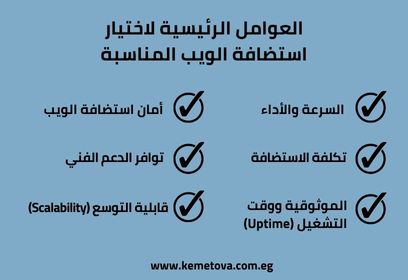
When you’re looking for the best web hosting for your website, consider these factors:
Speed and performance
Page load speed is one of the main factors in user experience and in how your site ranks in search results. When choosing a hosting plan, make sure the servers offer high speed and stable performance. Sites that load slowly keep losing visitors and slip in search rankings.
Web hosting security
Security is a vital factor you shouldn’t overlook when choosing web hosting. Check that the hosting company gives your site strong protection against cyberattacks such as DDoS, and provides SSL certificates to protect data sent between the server and users. Also make sure there are regular backups, so your site can be restored if something goes wrong.
Hosting cost
Cost can influence your choice of hosting, but it shouldn’t be the only factor. Balance price against features. Some companies offer low prices to attract customers, then charge extra for basic services, so read the fine print carefully and choose the plan that gives you the best value for money.
Technical support
Effective technical support can be the difference between a site that runs smoothly and one with constant problems. Make sure the hosting company offers 24/7 support through different channels, such as phone, email and live chat. Strong support helps you solve problems quickly and keeps downtime to a minimum.
Reliability and uptime
Uptime is the percentage of time your site is available online. Choose a hosting company that guarantees at least 99.9% uptime, because long periods of downtime hurt your site’s reputation and cost you visitors and revenue.
Scalability
As your site grows and gets more visitors over time, you’ll need more resources. Make sure the hosting plan you choose lets you scale up easily without moving your site elsewhere. This flexibility lets you focus on developing your site instead of worrying about technical challenges. Learn about the key advantages of Kemetova web hosting.
How to Compare Web Hosting Companies
Follow these guidelines to compare web hosting providers:
- Before choosing a hosting plan, read user ratings and reviews. They help you understand a hosting company’s strengths and weaknesses from the point of view of customers who have used the service.
- Before making your final decision, read the terms of service and refund policies carefully, check for hidden fees and find out what happens if you decide to cancel.
- Many hosting companies offer a free trial or a money-back guarantee for a set period. These offers let you test the service and make sure it meets your needs before committing to a long-term plan, without any financial risk. Use them to assess the service’s performance, technical support and extra services.
Read also: how to choose the best company to manage your website hosting.
Essential Tips for Choosing Web Hosting
- Avoid long-term plans at first. They can look tempting because of the discounts, but it’s better to start with a short plan so you can assess the hosting’s performance before committing. If it works well, you can sign up for longer later.
- Choose a hosting plan based on your site’s type and needs, not on ads that tempt you into more hosting than you need.
- Once you’ve chosen hosting, monitor your site’s performance regularly with tools such as Google Analytics and uptime monitors. If you notice speed dropping or downtime increasing, change your hosting plan or provider.
Choosing the right web hosting plan for your website means considering many factors, as we’ve covered. By following the tips in this article, you can make a clear decision and choose hosting that supports your site’s goals and gives users a great experience. Remember that investing in good hosting is an investment in your website’s long-term success.
See the types of web hosting we offer at Kemetova and choose the one that fits your website’s size. You can also register a domain for your site easily, and you can contact the Kemetova team with any questions.
Frequently Asked Questions (FAQ)
What is the best hosting for beginners?
Shared hosting is a good choice for beginners, thanks to its low cost and ease of use.
How can I be sure a web host offers enough security?
Look for hosting companies that offer security features such as SSL, DDoS protection and automatic backups.
Can I upgrade my hosting plan later?
Yes. Most hosting companies let you upgrade your plan as your site’s needs grow.