Google Ads is one of the most powerful digital advertising tools in the world, letting you reach a large, precisely targeted audience. But successful Google Ads management takes more than setting up a simple ad if you want the highest return on investment (ROI).
Google Ads lets businesses and marketers show their ads effectively to their target audience across Google’s services and platforms, such as Search and YouTube.
Google Ads is highly effective in digital marketing, giving advertisers the ability to reach millions of users in a personalized way based on their interests and their search and browsing behavior.
According to Google’s figures, Google Ads accounts for about 30% of global digital ad revenue, and more than 90% of digital marketers rely on it as a core part of their marketing strategy, which shows how big a role it plays in digital marketing.
In this article, we’ll go through the best practices for managing Google Ads, from setting up campaigns and targeting your audience to analyzing performance and getting the highest return on investment.
How to Manage Google Ads Campaigns Professionally
Managing Google Ads isn’t random; it’s a connected series of steps that starts with setting up the campaign correctly, moves through choosing the right keywords and ends with analyzing results and improving performance. Success with Google Ads depends on careful practices and an ongoing strategy that attracts your target audience and reaches your marketing goals.
Here are practical, detailed steps for managing Google Ads to help you run your campaigns efficiently and get the highest return on your investment:
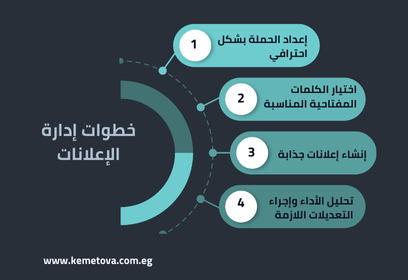
Google Ads management: set up your campaign professionally
To set up a successful ad campaign, you need to define:
- The right campaign goal
Before starting any ad campaign, define your goal clearly. For example, do you want to increase sales? Bring traffic to your website? Build brand awareness and reach potential customers? Choosing the goal carefully affects the whole campaign setup, from how ads are shown to your bidding strategy.
Google Ads gives you many goal options, such as sales, website traffic or leads, so make sure you choose the goal that fits your overall marketing strategy.
- Your target audience
Targeting the right audience is the foundation of any successful ad campaign. Understanding your audience is an essential step to make sure your ad reaches interested people. You can use tools such as Google’s audience insights to get detailed data about your audience, such as their location, demographics, interests and behavior.
- Your campaign structure
Splitting your campaign into ad groups is an effective way to manage your ad content. For example, each ad group can focus on a specific product or service, with several different headlines and descriptions to test how your ads perform. This helps you deliver more precisely targeted ads.
Google Ads management: choose the right keywords
Keywords connect your ad with what users need. You can use tools such as Google Keyword Planner to choose keywords related to your field, focusing on:
- Broad match keywords, to reach a wider audience.
- Exact match keywords, to target a specific audience.
- Negative keywords, to avoid wasted clicks from people who aren’t interested.
It doesn’t stop at choosing keywords. Keep improving them, monitor their performance and make changes when new trends appear in the market.
Google Ads management: create compelling ads

To create compelling ads, you need persuasive ad copy. The text is the first thing that catches users’ attention. To write effective copy that grabs attention:
- Use direct language that suits your audience.
- Include your main keyword in the headline and description.
- Keep the headline short and clear, with a direct benefit.
- Make an attractive offer or add a clear call to action (CTA) that encourages users to take a specific step.
You can also use ad extensions (now called assets), powerful tools that give users more information and add value to your ad, such as:
- Sitelinks, to send users to specific pages on your site.
- Call extensions, to make it easy to contact your company right away.
- Location extensions, to direct customers to your address.
Google Ads management: analyze performance and make the necessary changes
Analyzing data is essential for understanding what’s working and what needs to improve. Analysis is the main way to improve your ad campaigns, so connect Google Ads with Google Analytics to track:
- Click-through rate (CTR), to measure how well your ad catches users’ attention.
- Cost per click (CPC), to see how much each visit to your site costs.
- Conversion rate, to measure how well your ad reaches its main goals.
Google Ads campaigns need regular monitoring to keep succeeding. You can track performance and make changes by:
- Running A/B tests: create two versions of an ad, for example with different headlines or images, and test how each performs to improve your results.
- Reviewing performance weekly, and updating your keywords and ads based on how the campaign is doing.
- Setting your budget based on the ads that deliver the best returns.
This guide tells you more about paid advertising.
The Best Tools for Managing Google Ads Campaigns Efficiently
To manage Google Ads professionally, there are tools you can use to improve your campaigns and make them more efficient, including:
- Google Ads Editor: a free tool from Google that lets you manage and analyze your campaigns fully, tracking spend, clicks and conversions at the campaign, ad group and ad level.
- Google Keyword Planner: a keyword research tool built into Google Ads that helps you discover the keywords most relevant to your field and analyze competition and keyword costs.
- Google Analytics: a complete tool for analyzing your website’s performance and connecting it with your ad campaigns. It helps you track visitor behavior and analyze your ads’ clicks and conversions.
- Google Trends: used to explore current search trends on Google. It helps you find the most popular keywords and understand what your audience is searching for right now.
- Semrush: a complete tool for analyzing competitors, finding keywords and improving your SEO strategy.
These tools are a strong foundation for managing Google Ads and improving your campaigns. Used effectively with your Google marketing strategies, they can help you cut costs and get better results over the long term.
Key Tips for Managing Google Ads Effectively
There are many tips you can follow to make your Google Ads management more effective:
- Target your audience precisely. Focusing on a specific audience increases the chances your ad reaches the people most interested in your products or services.
- Watch seasonal trends, and use them to design ad campaigns that fit the seasons of the year.
- Set a realistic budget at first. Don’t start with big campaigns before testing performance.
- Improve ad quality with attractive, eye-catching headlines and text, supported by high-quality images or videos, to catch users’ attention and encourage them to engage with the ad.
- Improve your landing pages so they match the ad’s content, are easy to use and load quickly, which encourages visitors to take action, such as buying or signing up.
- Measure and monitor your campaigns’ performance regularly, focusing on click-through (CTR) and conversion rates to find the ads with the best results and improve them.
- Test your ads regularly with A/B tests on elements such as headlines, images and text, to find the most successful options and apply what you learn to future campaigns.
Applying these tips well helps you manage Google Ads effectively and get the highest return on your investment.
Read also: the most effective marketing strategies for projects and companies.
Managing Google Ads successfully takes a deep understanding of your goals and audience, and the flexibility to adjust based on data. By applying the tips and tools above, you’ll be able to improve your ad campaigns and get a high return on your investment.
What are you waiting for? Start applying these steps now; every successful campaign is a step toward a better marketing future!
If you’re looking for a trusted partner to manage your ad campaigns professionally and get real results, get in touch with Kemetova now, and let our specialist digital marketing team help your business grow with confidence.