
In today’s digital age, appearing in search results is essential for any business that wants to reach its target customers. When you want to learn about anything, the fastest way is to type your question into a search engine, and consumers around the world rely on search engines to find the content, information and answers they need. Advertisers use search engine results pages (SERPs) to make their products, brands or websites more visible through a digital marketing strategy called search engine marketing (SEM), or paid search.
Search engine marketing (SEM) is one of the most powerful strategies for helping businesses strengthen their online presence and get more conversions and sales. It’s also one of the most effective ways for marketers to grow businesses in a crowded, competitive market.
So what is search engine marketing, and how does it work? That’s what we’ll cover in this article.
What Is Search Engine Marketing (SEM)?
What is SEM? SEM stands for search engine marketing, also known as paid search. It’s a digital strategy for making websites more visible on search engine results pages (SERPs) with paid ads, usually on platforms such as Google Ads and Microsoft Advertising (formerly Bing Ads), where advertisers pay for their ads to appear when people search for specific keywords.
How Does Search Engine Marketing Work?
Search engine marketing is an effective way for businesses to pay for a prominent position on search engine results pages (SERPs).
It works by having businesses bid in an auction for the keywords users search for most when looking for a particular service or product. The winning bids (Google also weighs ad quality) get the best positions, so their ads appear at the top of the search results or beside them, above the regular results.
These ads are known as pay-per-click (PPC) ads, and they come in different forms. Some appear as short text ads, while others appear as product listings called shopping ads. Shopping ads focus on products and let consumers quickly see key information, such as the price and the advertiser’s name, which makes it easier for them to decide to buy.
In short, search engine marketing works in three steps:
- Choosing keywords: the advertiser starts by choosing the keywords their audience searches for, which the ad will target.
- Setting the budget and competing: the advertiser sets how much they’re willing to pay per click and enters a competitive auction with other businesses, where higher bids get priority.
- Paying per click: when a user clicks the ad, the set cost is charged, whether they buy or not.
What Are the Types of Search Engine Marketing?
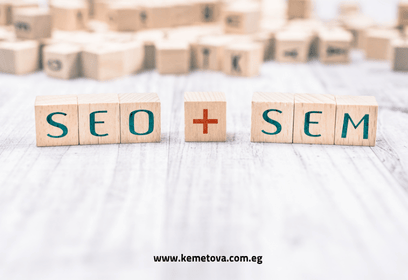
Search engine marketing is often divided into two main types: unpaid optimization, known as search engine optimization (SEO), and paid ads, known as pay-per-click (PPC).
1. Pay-per-click (PPC) ads
With this type of ad, the advertiser pays for every click their ad gets. It includes paid text, display and shopping ads that appear at the top of search results when a user searches for the target keyword.
It’s based on advertisers bidding on keywords, and the advantage is that you only pay when someone clicks. You can run these ads through Google Ads.
2. Search engine optimization (SEO), the unpaid side
SEO is about getting your site or content to appear naturally (organically) on the first pages of search results (SERPs) without paying. SEO is sometimes counted as a type of search engine marketing, but it’s unpaid.
To succeed with SEO, focus on creating original, high-quality content, which helps your site rank naturally in search results without paid ads.
Why Search Engine Marketing Matters
Search engine marketing promotes your business, services and products, helping you reach more search engine users. That spreads your brand identity and directly helps increase your sales. Ads send customers straight to the pages you want on your site, where they start the sales journey you’ve prepared, which makes it easy for them to buy or sign up.
SEM is one of the fastest ways to bring target visitors to your site, for several reasons:
- Immediate results: unlike SEO, which takes a long time to get results, SEM can send traffic to your site right away.
- Precise targeting: you can target your audience by location, age, interests, device and even search behavior.
- Full budget control: you control your campaign costs and can set a daily or monthly budget.
- Accurate performance measurement: ad platforms give you detailed reports on how your ads perform, which helps you keep improving your campaigns.
- High return on investment (ROI): run well, campaigns can deliver a good return by increasing sales and attracting potential customers.
How to Build a Search Engine Marketing Strategy
The goal of an SEM strategy is to get the most out of your paid ads. To make it work, you need to control the factors that affect your campaigns, such as choosing the right keywords, setting your budget carefully and writing compelling ad copy.
To create an effective strategy, follow these steps:
- Choose the right keywords carefully.
- Assess the competition for your keywords.
- Manage your account and set up your campaigns effectively.
- Write original, distinctive ad copy.
- Improve your landing pages and the experience they give.
- Analyze and assess your ads’ performance continuously, and keep improving them.
Here’s a guide to the best Google Ads management practices.
Key Tips for Successful Search Engine Marketing
Getting started with search ads can feel overwhelming and complicated, but the right strategies will make your campaigns more successful. Here are some effective tips:
- Choose your keywords carefully, starting with a study of your site and your customers, so your targeting is precise.
- Use geographic targeting to reach potential customers faster.
- Set negative keywords so your ad doesn’t appear in irrelevant searches.
- Include a clear call to action (CTA) to increase audience engagement.
- Try different types of search ads to find the one that best fits your goals.
- Review and assess your ads’ performance regularly, to improve them and get better results in the future.
Search engine marketing (SEM) is a powerful tool for increasing your visibility online and growing sales quickly, by targeting the right audience, improving ad quality and analyzing performance continuously. That way, you can get great results that help you reach your marketing goals effectively.
If you want to boost your success online, invest in a solid, well-planned SEM strategy. At Kemetova, we offer a full range of search engine marketing services, along with web hosting and domain registration, with payment in Egyptian pounds. If you have any questions, get in touch with the Kemetova team.