
If you own or run a website, whether it’s a business site, a blog or a personal site, appearing on the first page of search results can make a huge difference to how many of the right people you reach and how much you earn.
Ranking at the top of search results is now a main goal for every site owner who wants more visitors. To get there, understanding search engine optimization (SEO) is the key to online success.
In this article, we’ll explain what SEO is, why it matters and the main types of SEO that put you ahead and make your site more visible online.
We’ll cover:
- What does SEO mean?
- Why SEO matters
- The types of SEO for your website
- The most common SEO mistakes and how to avoid them
What Does SEO Mean?
SEO stands for search engine optimization. It’s a set of strategies and techniques that bring more visitors to a website by improving its ranking in search engines like Google. The goal is for your site to appear on the first page when people search for words or phrases related to your content and what you offer.
Although the term refers to “search engines”, SEO is really about people more than search engines, because it centers on:
- Knowing and understanding what users are searching for online.
- The answers to the questions they’re trying to find.
- The keywords they use when they search for something.
- The type and format of content they consume.
Once you understand these things, you can connect people searching online with the solutions your website offers.
Why SEO Matters
SEO isn’t just a way to improve your ranking in search results. It’s a complete strategy that can have a big effect on the success of your website and your online business.
Here’s why SEO matters for any site owner who wants to stand out:
More organic traffic
Organic (unpaid) traffic from search engines is the main source of visitors for many websites. Optimizing your site for search engines helps it appear in the top results, which increases the chance that people click through, and so brings more visitors.
More credibility and trust
Users tend to trust the websites that appear at the top of search results. Being there shows visitors that you’re a reliable source for the information or services you offer, which builds your credibility and the trust of potential customers.
A better user experience
A big part of SEO is improving the user experience, through a faster site, easier navigation and valuable content. A better experience keeps visitors happier and makes them more likely to come back.
A strong return on investment
SEO can be one of the most cost-effective investments you make. Organic traffic usually costs less than paid ads, and as you attract more interested visitors over time, your return keeps growing.
Staying ahead of competitors
In today’s competitive market, ranking at the top of search results can be the difference between you and your competitors. By improving your SEO continuously, you gain an edge by attracting more visitors and turning them into leads.
Reaching a global audience
With the right SEO strategy, you can reach a global audience without a huge marketing budget, by focusing on keywords that target international markets and attracting visitors from around the world.
Measuring performance and improving
Analytics tools such as Google Analytics let you track your site’s performance, see where visitors come from and which keywords they use. That helps you keep improving your SEO strategy for better results over time.
More engagement
A search-optimized site gets more engagement from visitors, because more of your content appears in search results. That leads to more interaction, whether it’s comments, shares or even purchases if your site sells services or products.
The Types of SEO for Your Website
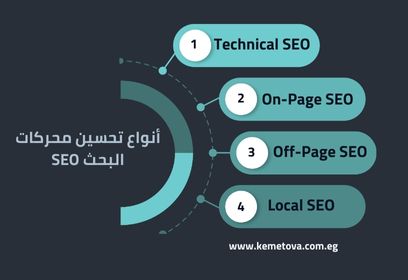
What are the types of SEO?
Optimizing your website for search engines makes it easier for people to find your products and services, which helps turn potential customers into loyal ones over time. Here are the main types of SEO:
First: Technical SEO
Technical SEO deals with the technical side of your website that directly affects its performance. It covers:
- Faster page loading, making sure every page loads quickly for a better user experience and higher rankings.
- A well-organized site structure that’s easy for search engines to crawl and index.
- Mobile compatibility, making sure the site works well on phones and tablets.
The aim is to make sure search engine crawlers can reach and index your site correctly, without errors. Check your robots.txt file regularly and review the results to find and fix any problems.
You should also improve your URL structure and build a fast website that meets search engine requirements.
Second: On-Page SEO
On-page SEO improves every page of your website from the inside so it performs well in search engines. It includes:
- Optimizing the headings, text and visual elements on every page to make them more search-friendly.
- Using the right keywords naturally in your content, headings and paragraphs to improve your visibility.
- Writing engaging page titles and meta descriptions that include your keywords, to attract both visitors and search engines.
It also means using high-quality images, writing useful content and focusing on the best possible user experience.
Third: Off-Page SEO
Off-page SEO covers the steps you take outside your site to promote its products or services. It includes:
- Building backlinks: getting links from other websites that point to yours, which increases your site’s credibility and importance in the eyes of search engines.
- Social media: sharing your content on social platforms to bring more visitors and raise awareness of your site and its services.
- Positive reviews: good ratings and reviews from users build your site’s credibility and help improve its rankings.
Fourth: Local SEO
Local SEO is one of the most important types for local businesses. If your website is meant to bring more customers to your local store, local SEO helps you reach as many of them as possible. It includes:
- Optimizing local listings by adding accurate information about your business to listings such as Google My Business.
- Using local keywords that include your location to reach local customers.
- Getting local reviews by encouraging customers to leave positive reviews, which improves your visibility in local search.
The Most Common SEO Mistakes and How to Avoid Them
What is bad SEO, and how can it hurt your website?
Bad SEO is anything that hurts your ranking in search results, creates a poor user experience (UX) or goes against Google’s guidelines. These are often outdated SEO tactics.
SEO mistakes can be accidental, like having duplicate content on your site without knowing it, or deliberate, like trying to game the search algorithm with unethical techniques.
Here are the most common mistakes that hurt SEO:
Low-quality content
High-quality content is one of the foundations of SEO. Poor content leads to poor SEO: cutting corners on content to save money or time backfires, leading to low rankings and fewer conversions.
Low-quality content is content that:
- Is inaccurate.
- Doesn’t answer the user’s question (what they typed into Google before reaching your site).
- Has lots of grammar or spelling mistakes.
- Is hard to read and follow.
- Lacks expertise, trustworthiness and credibility.
Avoid these mistakes and write accurate, readable content that matches what the user is looking for, so you rank better.
Duplicate content
Duplicate content is the same content published on several pages with only a few words changed, and it’s a sign of low-quality content.
Duplicate content causes several problems in search engines, such as:
- Lower rankings for your pages.
- The wrong version of a page showing up in Google.
- Indexing problems.
All of this reduces your traffic and hurts your site’s goals and the services it offers.
Too many ads at the top of the page
Ads at the top of the page can be a great way to earn more, since lots of people see and click them.
But too many ads at the top of the page hurt your website. Balance the ads above the fold with your content, follow best practices for displaying ads, and avoid pop-ups and videos that autoplay with sound on desktop.
Keyword stuffing
Keyword stuffing means writing unnatural content by repeating your keywords far too often.
It damages the quality of your content, makes it hard for visitors to read and understand, and can even lead Google to take manual action against your site.
Use your keywords where they belong, naturally and in context, without repetition or stuffing.
Toxic backlinks
Toxic backlinks are harmful links that hurt your website in Google’s results. To check whether your site has toxic backlinks, open Semrush, start a project and click to start a backlink audit. You’ll get a full report on the health of the links pointing to your site.
Spun content (content rewriting)
Content spinning means taking content from another website, making a few small changes and publishing it on your own site.
Copied content hurts your site in search engines. You can avoid it by:
- Taking inspiration from competitors’ ideas and using them in new ways that add real value to your content.
- Filling the gaps in competitors’ content with better, more in-depth content. The Keyword Gap tool can help you find content ideas your competitors are missing.
Using anchor text the wrong way
Anchor text is the clickable text of a link. For example, a link’s text might be “SEO”. Links help search engines like Google and Bing crawl and index your website by guiding their crawlers from one related page to another.
Anchor text also tells search crawlers what the linked page is about, and tells visitors what they’ll find when they click.
To avoid misusing anchor text, follow these best practices:
- Keep anchor text short and descriptive.
- Only add links where they’re relevant to the content.
- Make the purpose of the link clear.
- Don’t stuff anchor text with keywords.
- Use natural language your readers understand.
Remember that Google’s guidelines are about improving the user experience, so focus on how visitors benefit from your links and their text, rather than how Google’s crawlers read them.
SEO is a vital part of any digital marketing strategy that aims to make a site more visible and bring in more of the right visitors. With a solid understanding of SEO, site owners can improve their online presence and make sure they appear in search results.
SEO is an ongoing journey that needs constant updates and follow-up. If you want strong long-term results for your website, the team at Kemetova offers effective SEO services to help you get there. If you have any questions, get in touch with us.