Some people think a restaurant website is optional, but reality says otherwise. In 2020, about 760 million people ordered food online, and restaurants offering online ordering saw orders rise by 32% on average. That growth led to noticeably higher sales and business growth for restaurants, which is why a restaurant website is an essential step for running a restaurant and increasing its sales.
So what makes a restaurant website successful? How does it go from an ordinary site to a platform that attracts diners and leaves a lasting impression? The answer is in the details and core features we build into restaurant websites at Kemetova, and that’s what we’ll cover in this article.
Why a Restaurant Website Matters
In today’s digital age, running a successful restaurant isn’t just about the quality of the food or the service inside. An online presence has become key to attracting more customers and building a strong reputation. A restaurant website is one of the most important modern marketing tools, giving customers an easy way to discover your restaurant, browse the menu and order food or book a table online.
Why is a restaurant website essential today? Here’s why:
- Reach more customers: many people rely heavily on the internet to find new restaurants to try, and your website is the first thing they’ll see when they search for restaurants near them.
- Build brand awareness: your website reflects your restaurant’s identity and style, and answers customers’ most common questions, such as opening hours, location, the menu and prices, which helps create a strong, memorable impression.
- Increase sales: a website gives you extra ways to earn revenue, with online ordering and delivery.
- Engage with customers easily: a website lets customers read other people’s reviews and experiences, send questions and give feedback directly, which strengthens communication and builds trust.
- Rank higher in search engines, so your restaurant appears when people search for restaurants nearby, which increases your chances of attracting new customers.
Learn the secrets of attractive website design in Egypt.
The Key Features of a Restaurant Website That Attracts Diners
A professional restaurant website has become essential. With more customers choosing restaurants online, your website is a key tool for attracting diners and increasing sales. Here are the key features of a professional restaurant website:
An attractive design that reflects your restaurant’s identity
The first thing visitors notice when they arrive on your site is the design. An attractive site with high-quality photos and colors that reflect your brand makes a strong, positive impression and encourages visitors to explore. Here’s a diagram showing an ideal homepage structure for a restaurant website.

Key details to build into a restaurant website design:
- Colors that suit the restaurant’s identity, with clear fonts. Learn about color psychology in web design.
- A menu and dish photos that show the quality of your food and service.
- An easy-to-navigate user interface that makes the experience enjoyable and smooth.
A professional restaurant website leaves visitors with a positive impression and encourages them to explore the rest of the site. The design should also match your restaurant’s atmosphere and the type of food you serve.
Online ordering
Online ordering on a restaurant website has become essential. Most customers prefer to place food orders easily through the website without calling.
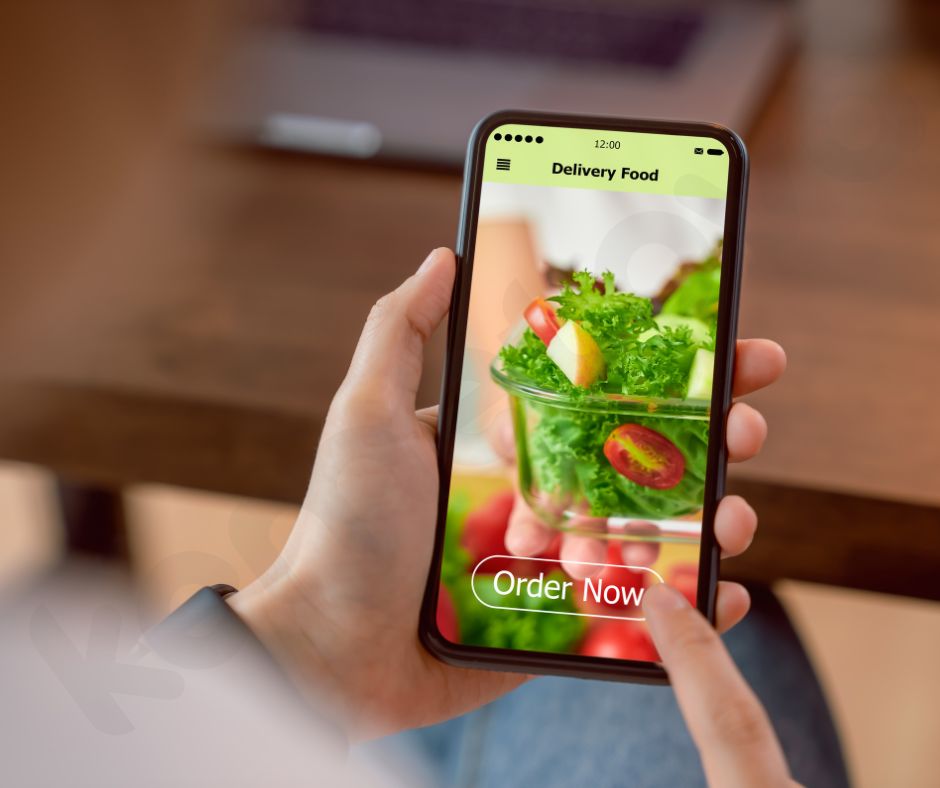
You can add this feature to your restaurant’s website easily, which lets you:
- Add an online menu where visitors can choose their favorite dishes.
- Offer order customization, such as removing certain ingredients or adding extras.
- Provide a cart and clear steps for completing the order easily.
One of the biggest benefits of online ordering is more sales, by reaching customers who prefer to order online, and it saves customers time and effort.
Online delivery
Supporting delivery is a strong feature that adds a lot of value to a restaurant website, especially if it’s linked to a system that calculates delivery fees automatically based on distance.
You can do this by connecting your restaurant’s website to map services such as Google Maps, to estimate distances and set delivery fees easily.
Supporting online delivery gets positive results and builds customer loyalty by offering convenient options.
A mobile-responsive user interface
More than 60% of users browse the internet on their mobile devices, and that share grows every day. Your website needs to be responsive on every device and screen, and designed specifically to work well on smartphones.
This feature is very important for a restaurant website, because it lowers your bounce rate and helps your site rank higher in search engines such as Google and Bing.
Read also: how to build a mobile-friendly website.
A dedicated section for customer reviews
Past customers’ opinions have a big influence on new visitors’ decisions, so a dedicated section for customer reviews builds your restaurant’s credibility and customers’ trust. To make reviews effective, let past customers write reviews directly on the site, with their photos or names if they like, and keep them up to date to show you engage with customers.
Customer reviews help build relationships with new customers and improve your restaurant website’s ranking when people search for “restaurants near me,” which strengthens your image as a business that cares what its customers think.
Multiple payment methods
Offering different payment methods makes customers comfortable and encourages them to complete orders easily. It also attracts a wider audience and increases your order completion rate.
The most common online payment methods used on the best restaurant websites:
- Credit cards.
- Digital wallets, such as PayPal.
- Cash on delivery, which many customers prefer.
A search box
A search bar on a restaurant website makes it easy for visitors to find their favorite dishes quickly. It saves customers time and greatly improves the user experience (UX).
Different ways to get in touch
Another core feature of a restaurant website is phone numbers for contacting the restaurant’s branches directly. This can’t be overlooked, because contact options are one of the most effective ways to connect customers with the restaurant, whether for questions, orders or feedback.
If the restaurant has several branches, list each branch’s phone number separately, with the address clearly shown for each one.
Along with phone numbers, you can add other ways to get in touch, such as email, WhatsApp chat or online contact forms, to suit every customer.
Security to protect users’ data
With cyberattacks on the rise, protecting users’ data online matters more than ever. Your website should follow the highest security standards to protect customer data, such as payment information and personal details. Security shows your restaurant is professional and cares about protecting its customers, which makes them feel safe using the site.
Key security elements to include:
- The HTTPS protocol to secure the connection between the site and its users.
- An SSL certificate to encrypt sensitive data, such as credit card information.
- Trusted, internationally recognized payment methods.
- Regular updates to close any security holes.
Security is very important for a restaurant website. It builds trust between customers and the restaurant, and it helps the site rank higher, because search engines prefer secure sites.
Site speed and performance
Speed is an important factor to consider for a restaurant website. Site speed has a big effect on the user experience (UX) and on search rankings. If your restaurant’s website is slow, visitors may leave before seeing what you offer.
You can make your pages load faster by:
- Compressing images with a tool such as TinyPNG, and compressing other files.
- Using strong hosting. At Kemetova, we offer web hosting with top speed and security.
- Cutting unnecessary code.
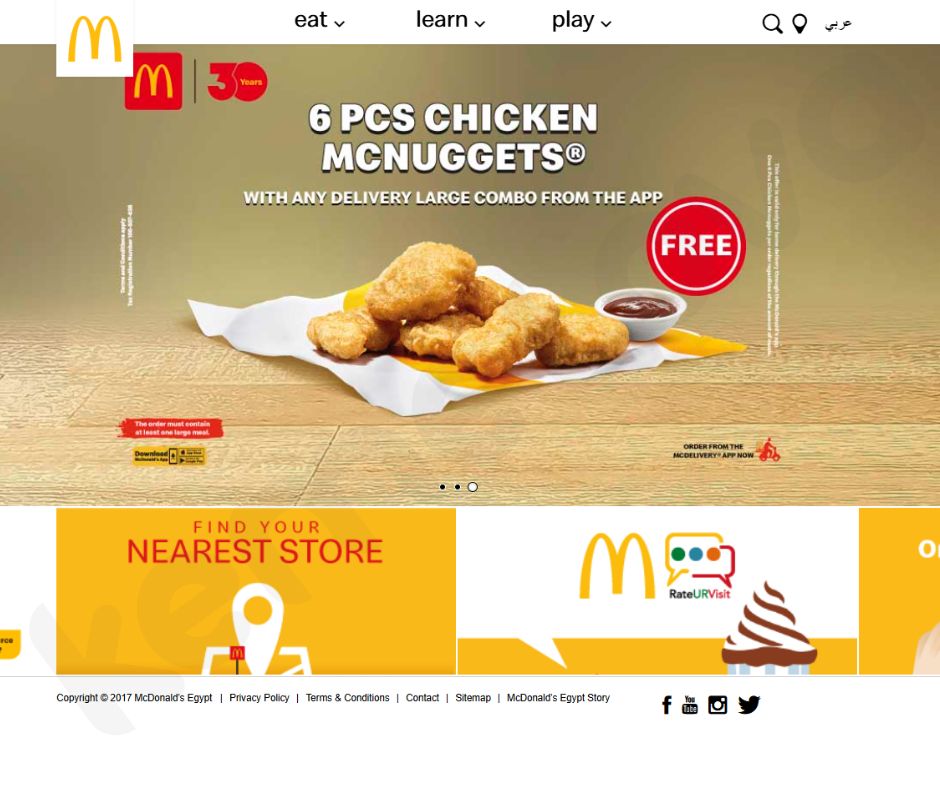
Here’s a real example of a famous restaurant’s website:
Key Tips for Restaurant Website SEO
Optimizing a restaurant website for search engines is one of the most important ways to make sure it appears in search results, especially when people search for restaurants nearby.
You can improve a restaurant website’s SEO by:
- Using keywords related to the food your restaurant serves.
- Writing attractive meta descriptions that include the restaurant’s name and your target keywords.
- Improving your site structure and linking your internal pages together.
- Publishing valuable content, such as articles about food.
- Using tools such as Google Analytics to analyze visitor behavior and keep improving the site.
- Adding your restaurant’s details to Google My Business so you appear in local results when people search for restaurants nearby.
A restaurant website needs attention to detail to give users a smooth, attractive experience, and it should be an effective tool for attracting diners and increasing sales. By building in the features above, your restaurant can have a strong online presence that stands out from competitors.
If you’re looking for the best website design company for restaurants, working with Kemetova will give you these features and take your restaurant to the next level.